Comfort in Sustainability
The Start of a Neighborhood
With winter seeming to have come and gone in a flash here in southwest Colorado, progress on the construction of new Phase 2 homes has hardly been affected and has been moving along at a blistering pace. The framing crew is now working on the final home. Following closely behind them are the mechanical trade crews, often referred to as MEPs, including mechanical (HVAC), electrical and plumbing. In this “rough” phase of construction, all of the behind-the-wall systems that make a home convenient and comfortable are installed and inspected before getting covered by insulation and drywall. Specifying these systems appropriately and installing them correctly is a critical step towards a healthy and energy efficient home that maximizes comfort while minimizing energy consumption.

New Phase 2 homes with (temporary) green roofs are popping up. The geodesic dome greenhouse is in the center of Phase 2. Phase 1 is in the background and the tennis, pickleball, and basketball court is on the right.
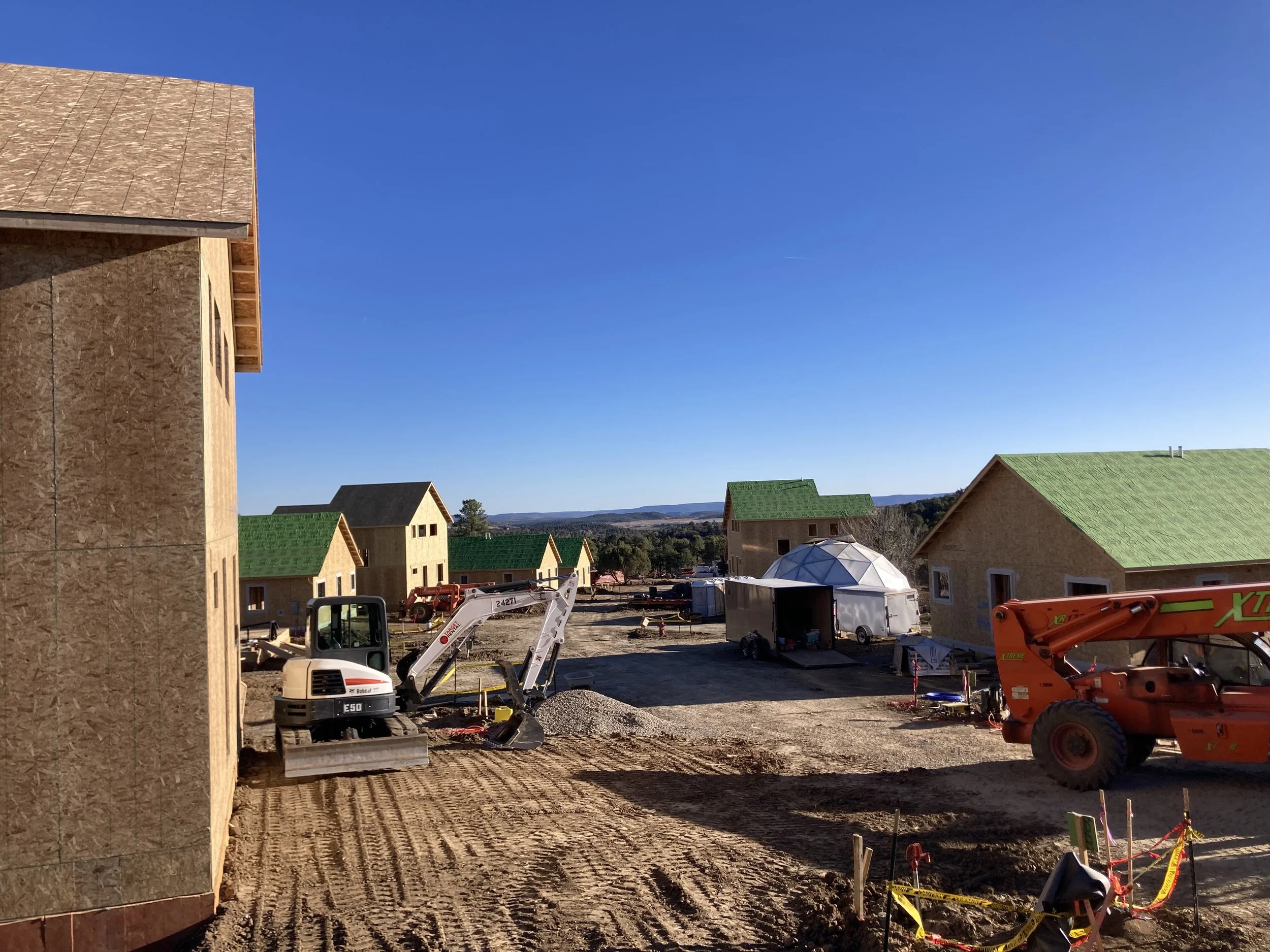
From the north end of the cluster, hammers bang away as the framers build the latest Ponderosa model.
We will be equipping the Phase 2 homes with the latest technology in energy efficiency and adding features to make updating to future technology easier. For this, we are following the Department of Energy’s Efficient New Home program (formerly Zero Energy Ready Home), which treats the whole home as a cohesive system and has specific energy requirements for all of the main components of a house that contribute to its efficiency. According to the DOE’s findings, new homes built to these standards typically have Energy Rating Index scores in the 40s or lower, which translates to 50% or more in energy savings compared to a standard home and therefore, much lower cost of ownership.
Keeping the Heat
According to the U.S. Energy Information Administration, heating, ventilation and air conditioning (HVAC) accounted for an average of 52% of a home’s energy consumption in the U.S. in 2020. Being the majority of energy use in the average home, it makes it the obvious primary focus for efficiency gains. With the goal being to keep it warm inside in the winter and cool in the summer, the big focus in increasing efficiency is to limit thermal transfer as much as possible. This primarily happens through direct thermal transfer (lack of insulation), leaks in the building envelope (drafty windows and doors, unbalanced ventilation). Excellent insulation, thermal breaks in the structure and airtight seals make a huge difference in abating these efficiency killers, but, as living beings, we also don’t want to live in a hermetically sealed box!
This is where an Energy Recover Ventilator, or ERV, comes in. This appliance uses a heat exchanger to transfer the heat from exhausted air to fresh air from outside, providing fresh air ventilation while recovering up to 90% of the thermal quality of the air leaving the house, heating or cooling. This creates a best-of-both-worlds scenario where we can seal the house for maximum efficiency while providing healthy, fresh air from outside. All Phase 2 homes will be equipped with this ventilation system in combination with a high-efficiency heat pump to achieve the desired comfort in the home while keeping energy bills low.

The above Juniper floorplan shows where the ERV will extract air in red and provide conditioned, fresh air in blue. In general, air is extracted from rooms with potential of humidity and fumes (utility spaces) and is replaced in living areas.
Same Principles, Other Systems
While the HVAC system is the biggest consumer, there is still another 25% of energy being used just to heat water, run the lights and keep food cold in the refrigerator. Technology, again, has an answer to make these processes more efficient by recycling heat already created or simply reducing the amount of energy necessary to produce the desired result.
For heating water, the culprit of high energy consumption in a standard appliance is the use of an electric resistance heating element as the sole method of heating the water inside. Electric resistance is notoriously inefficient (think space heaters, toasters and electric baseboards) as a heating method, but has been widely adopted because of its low cost to manufacture and install. Modern technology, however, has brought the efficiency of a heat pump into the world of water heaters, concentrating heat from the surrounding indoor air to heat the water in the tank. This process can be up to three times more efficient than heating with a simple heating element. For Phase 2, we have combined the heat pump water heater with a recirculation pump that provides instant hot water at every faucet in the house, saving both energy and water.
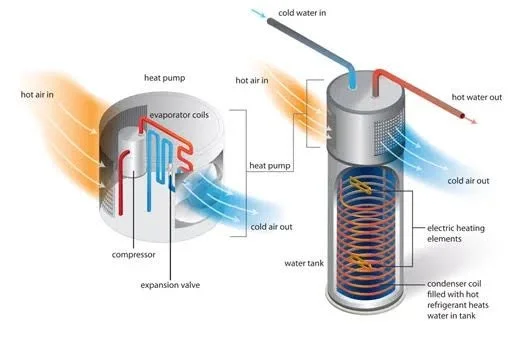
This diagram shows how an air-source heat pump water heater works, pulling heat from the air and transferring it to the water in the tank.
For other electrical appliances in the house, including lights and kitchen appliances, new technology allows these to run using less energy. Refrigerators are better insulated, induction stoves get around using the previously-mentioned and notoriously-bad electric resistance heating elements and LED light bulbs need just 1/10 the power to produce the same amount of light as an incandescent bulb (yet another electric resistance device).
By reducing the amount of electricity required to make a home comfortable and functional, energy costs are reduced and it becomes that much easier to make a home net-zero with an alternative electricity system like solar. All Phase 2 homes utilize these high-efficiency appliances and come prewired for solar to make it as easy as possible for homeowners to achieve energy independence, or just keep the bills low and people happy.